
Library Resources · Reading Culture
Building a Reading Culture
Five simple, everyday practices that help students become lifelong readers, plus a free printable checkup for your school.
Audrey Greeson
November 2026 · 6 min read
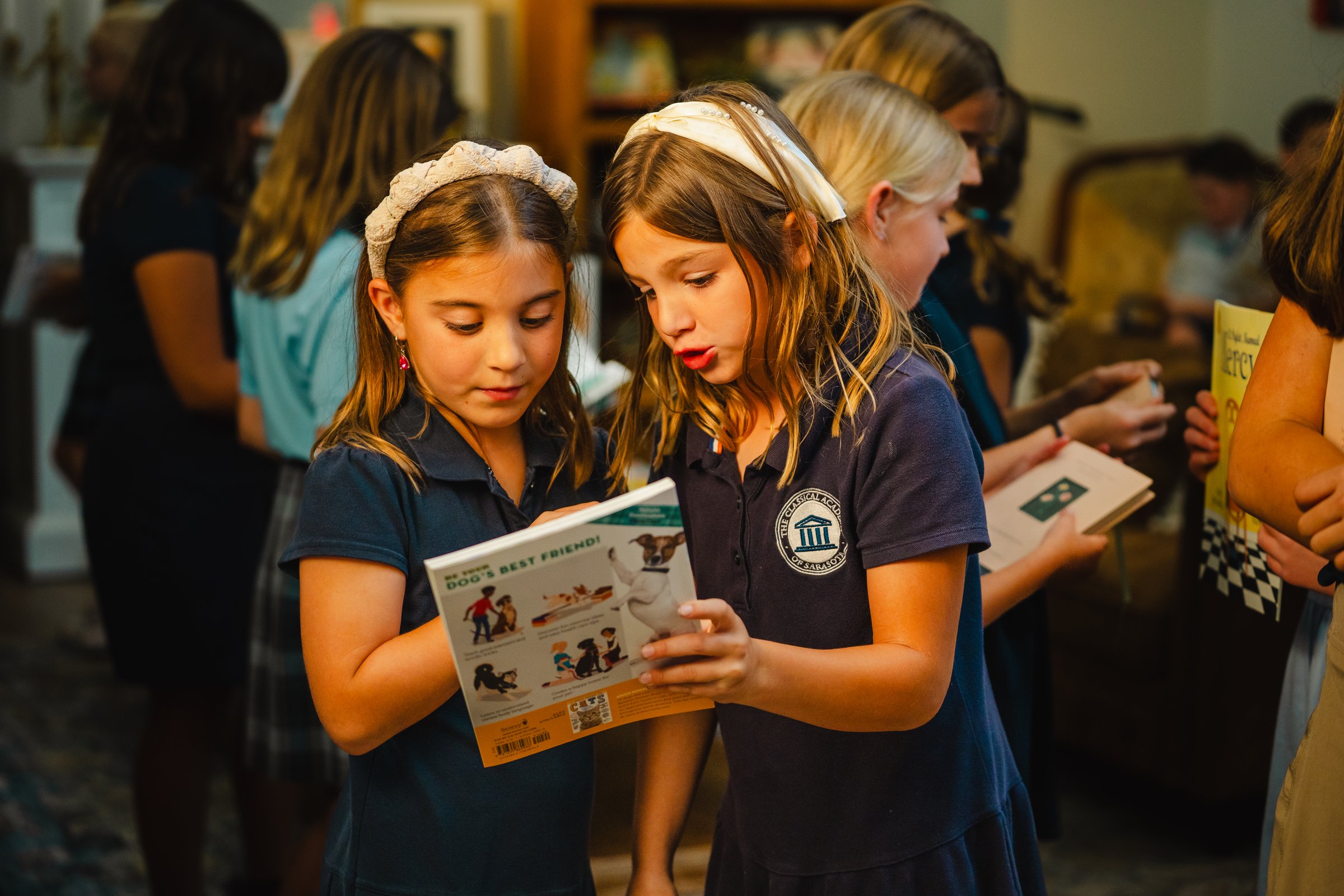
Book conversations help students find their next great read.
A strong reading culture doesn't happen by accident. It grows through small, consistent practices that help students see books as a source of joy, wonder, and growth. Whether you lead a library or a classroom, you help shape that culture. You don't need a big budget or a beautiful room to start. A classroom shelf, a rolling cart, and a few well-chosen titles can do a lot when they come with adults who love to read.
At Storyglory, we want every child to discover books that are true, good, and beautiful, and to learn to love reading along the way. Here are five simple ways to get started this year, in your library or your classroom.
Subscribe to Our Newsletter for School Librarians & Administrators
Join librarians and administrators who get curated book fair resources, collection guides, and read-aloud recommendations delivered to their inbox every month.
1. Make Books Visible
Students are more likely to pick up books they can see and browse. A spine on a packed shelf is easy to walk past. A cover facing out invites a second look.
- Display books face-out wherever you can, even just the top of a shelf.
- Rotate featured books regularly, every week or two, so there's always something new to notice.
- Create genre or seasonal displays. Try "If you loved…" pairings, new arrivals, or books for the holidays.
2. Model Reading
Students notice when the adults around them value books. When a teacher or librarian is excited about a story, that excitement spreads.
- Share what you're reading. A simple "Currently Reading" sign on your door or desk opens conversations.
- Read alongside students during independent reading time.
- Talk about your favorite books, including the ones you loved as a kid.
3. Protect Reading Time
Reading habits grow through consistent practice. When reading time is the first thing cut from a busy schedule, students learn it's optional.
- Schedule daily reading time, even if it's only 10–15 minutes.
- Read aloud regularly at every grade level. Older students love a good read-aloud too.
- Let students choose their own books. Choice builds ownership and stamina.
Celebrate reading, don't just assess it.
4. Create Book Conversations
Readers become more engaged when they share books with others. Talking about a story helps students understand it more deeply and helps them find their next read.
- Make room for short student book talks, one or two minutes, a few times a month.
- Keep recommendation cards near the checkout desk or classroom bookshelf so students can leave notes for the next reader.
- Post a "What I'm Reading" display with students' and staff members' current books.
5. Celebrate Reading
Small celebrations communicate that reading matters. Celebrate reading, don't just assess it.
- Feature student favorites in a display, on the morning announcements, or in the school newsletter.
- Host a book tasting. Set out a "menu" of books on tables and let students sample first pages.
- Celebrate reading milestones, like a finished series, a class read-aloud, or a new genre tried.
Try It in Your Space: The Classroom Reading Culture Checkup
We've put these five practices on a printable flyer for teachers and librarians alike. The back page has a Classroom Reading Culture Checkup with 12 quick yes-or-no practices, plus space to set one reading culture goal for the month and three small steps to reach it.
Ideas for using it:
- Fill it out for your own library or classroom at the start of each quarter, and see what's growing.
- Pair up with a colleague, so a teacher and a librarian can each choose one goal and check in with each other.
- Use it at a staff meeting so the library and the classrooms are working toward the same reading culture.
- Share it with your principal or PTA as a simple picture of what a reading school looks like.
Start Right Where You Are
You don't have to do all five at once. Pick one practice that fits your library or classroom this month, try it, and build from there. Every face-out cover, read-aloud, and book conversation helps one more student discover a love of reading.
How are you building a reading culture at your school? We'd love to hear what's working. Reply to our newsletter with your best ideas, from the library or the classroom, and let us know if we can share them with this community.
If you're new in your role, building a library or classroom collection from scratch, or just want to talk through these ideas, reach out to info@storyglorykids.org. Someone on the Storyglory team would be happy to help.
Related reading: Powerful, not Perfect · Getting Kids Excited About the Library
Storyglory Newsletter for School Staff and Librarians
Equip your school with better books—and a better vision for reading
Get practical ideas, trusted book recommendations, and thoughtful guidance for cultivating a Christ-centered reading culture in your school.
We respect your inbox. Unsubscribe anytime.